
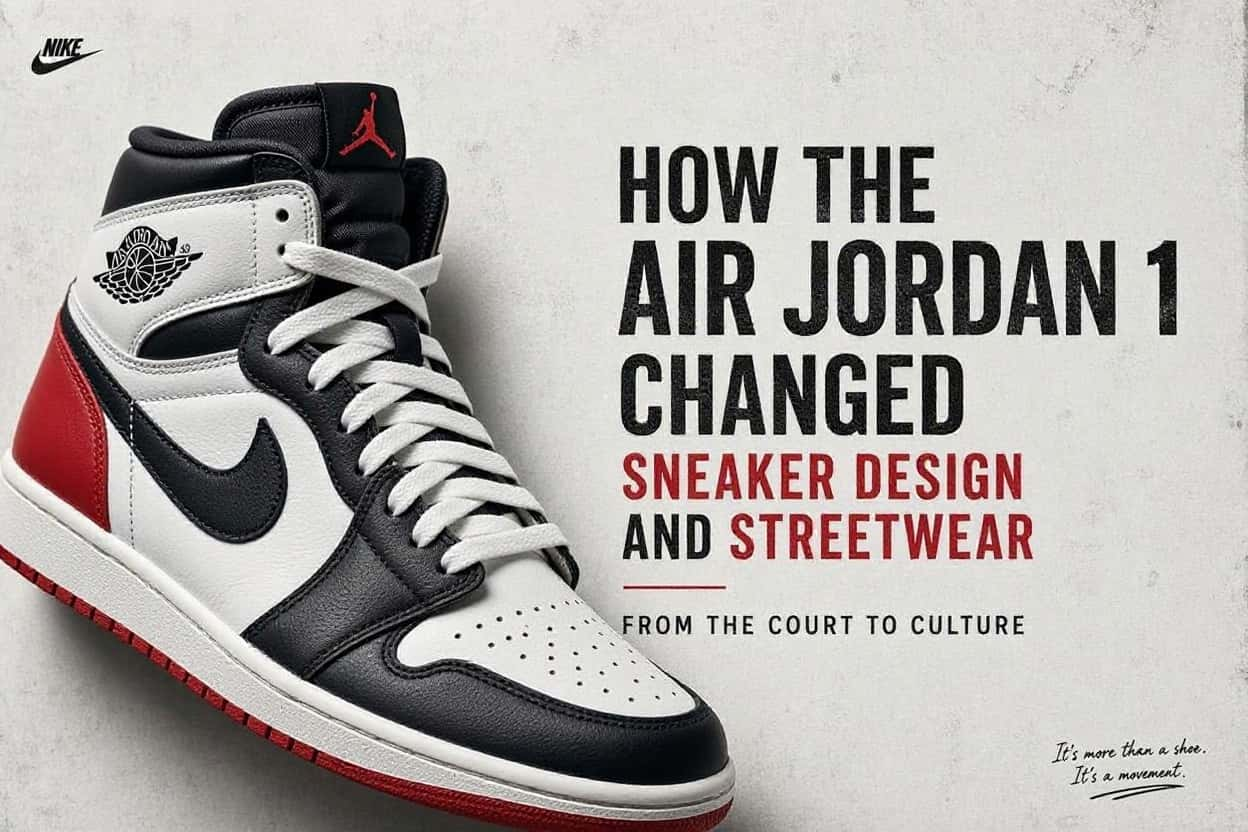
How the Air Jordan 1 Changed Sneaker Design and Streetwear
Few sneakers have influenced modern footwear culture as deeply as the Air Jordan 1.
Originally introduced in 1985, the shoe was designed for basketball, but its influence eventually extended far beyond the court. It became a recognizable symbol of sports marketing, sneaker collecting, streetwear, and the relationship between athletes and fashion.
Its success was not simply the result of a memorable color scheme or a famous endorsement. The Air Jordan 1 arrived at a moment when basketball footwear was becoming a powerful part of popular culture.
The Launch of a New Basketball Shoe
The Air Jordan 1 was created for Michael Jordan, who entered the NBA in 1984.
At the time, basketball shoes were generally associated with functional sporting equipment. Brands were beginning to recognize the commercial potential of athlete endorsements, but the scale of what followed with Jordan was unprecedented.
Nike released the Air Jordan 1 in 1985, using a design that combined recognizable basketball construction with bold color blocking.
The shoe’s high-top shape, leather upper, and contrasting panels made it visually distinctive.
Its connection to an emerging basketball superstar gave the model a story that consumers could easily recognize.
The Famous Black and Red Colorway
The black-and-red Air Jordan 1 is among the most recognizable sneaker designs in history.
Its visual identity became closely associated with Michael Jordan’s early career.
The story surrounding NBA uniform rules and the shoe’s colorway helped create a compelling marketing narrative. The exact details of the league’s penalties and Nike’s promotional messaging are often simplified in popular retellings, but the broader association between the shoe and basketball controversy became an important part of its mythology.
The result was a sneaker that felt rebellious at a time when traditional basketball footwear often looked relatively conservative.
A Different Approach to Sports Marketing
The Air Jordan project helped establish a new model for athlete-driven footwear branding.
Rather than simply placing an athlete’s name on an existing shoe, Nike developed a broader identity around Michael Jordan.
This included distinctive visual branding, advertising campaigns, signature product development, and a growing range of associated merchandise.
The approach changed how athletic footwear companies thought about product storytelling.
Consumers were purchasing more than equipment. They were buying into an identity connected to performance, personality, and popular culture.
From Basketball Courts to Everyday Fashion
The Air Jordan 1 gradually became part of everyday fashion.
Its basketball origins gave it a recognizable shape, but its leather construction and bold color combinations made it easy to wear outside sporting environments.
The shoe became especially relevant in hip-hop, streetwear, and youth fashion communities.
People began wearing basketball sneakers as expressions of personal style rather than strictly as athletic equipment.
This shift helped establish a broader sneaker culture in which footwear could carry social and cultural meaning.
Why the Design Still Works
The Air Jordan 1 has a relatively straightforward construction compared with many modern performance basketball shoes.
Its appeal comes from several visual characteristics:
- A high-top silhouette.
- Distinctive color blocking.
- Recognizable panel construction.
- A prominent side logo.
- A relatively simple overall shape.
These elements have allowed the design to remain recognizable across decades of reinterpretation.
The silhouette is also flexible enough to accommodate different materials, colors, and collaborations.
Modern releases can look dramatically different from the original versions while retaining the same recognizable foundation.
The Rise of Retro Releases and Collecting
As basketball footwear evolved, the Air Jordan 1 remained important through retro releases.
Nike and Jordan Brand brought earlier designs back to market, allowing newer generations to experience styles that had originally appeared decades earlier.
The collecting market also developed around release history, rarity, condition, colorways, and collaborations.
Some releases attracted considerable resale attention, although prices and demand can fluctuate significantly.
Collectors often distinguish between original vintage pairs, retro releases, and later reinterpretations.
For buyers, these differences matter because materials, construction, and manufacturing details can vary across releases.
Collaborations Expanded Its Cultural Reach
The Air Jordan 1 became a popular platform for collaborations with designers, artists, retailers, and cultural figures.
These projects introduced different materials, unusual color combinations, and limited production runs.
Collaborations helped demonstrate that an established athletic silhouette could function as a creative platform.
They also reinforced the relationship between sneakers, fashion, music, and contemporary art.
Not every collaboration becomes historically important, but the model’s adaptability has made it one of the most frequently reinterpreted sneakers in the industry.
A Lasting Influence on Modern Sneaker Design
The Air Jordan 1 helped establish several ideas that are now common in sneaker marketing.
Signature athlete footwear became a major commercial category. Retro releases became a recurring business strategy. Limited collaborations became an important part of brand storytelling.
Perhaps its most significant influence was cultural.
It helped make sneakers acceptable as everyday fashion objects with identities that extended far beyond sport.
The Air Jordan 1 is still worn on basketball courts, in cities, and as part of fashion collections around the world.
Its design has survived because it combines a clear visual identity with a story that continues to attract new generations of sneaker enthusiasts.