
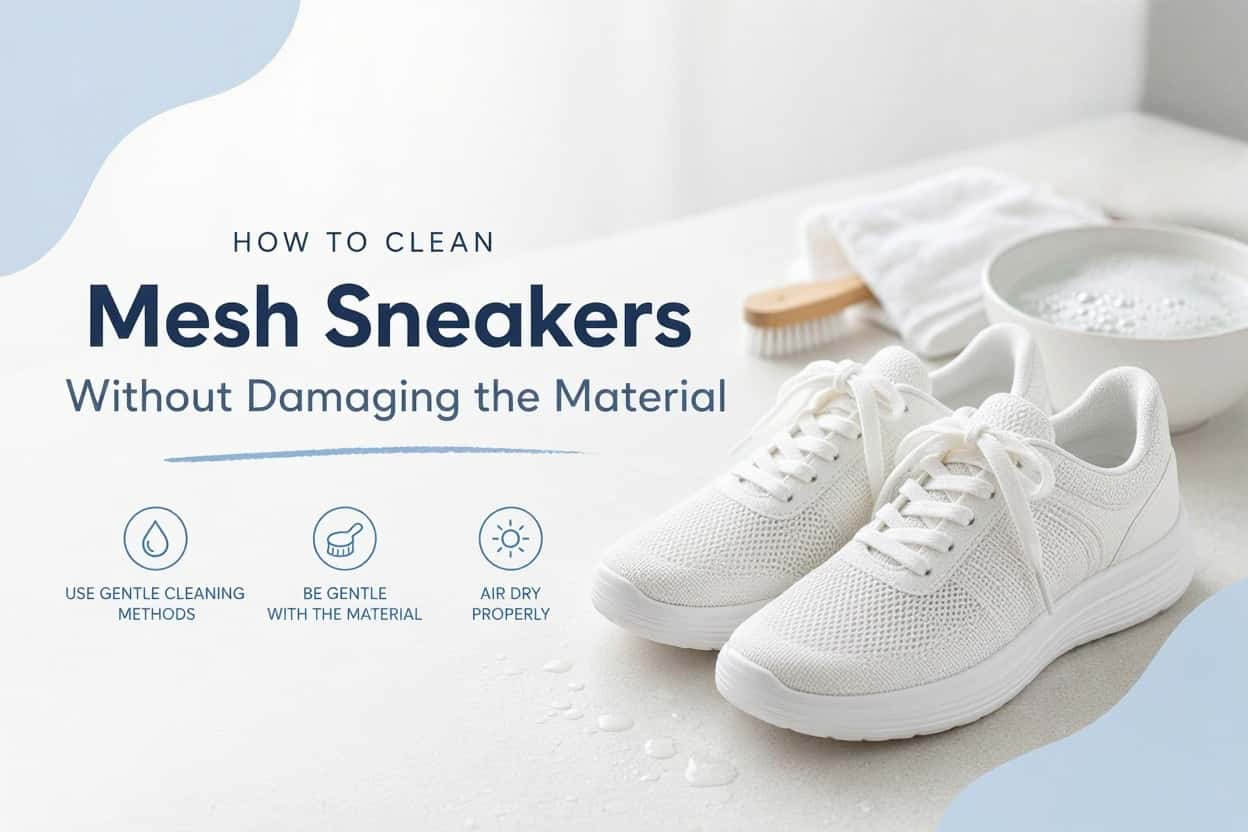
How to Clean Mesh Sneakers Without Damaging the Material
Mesh sneakers are popular because they are generally lightweight and breathable. Their open construction allows air to circulate through the upper, making them particularly common in running shoes and everyday athletic footwear.
Unfortunately, the same structure that improves ventilation can also make cleaning more complicated.
Dust, sweat, and fine dirt can settle between the fibers. Aggressive scrubbing may distort the mesh, while excessive moisture can affect adhesives and other shoe components.
Cleaning mesh sneakers properly requires a gentler approach than cleaning many smooth leather or rubber surfaces.
Understand the Type of Mesh
Not all sneaker mesh is identical.
Some uppers use relatively open synthetic fabrics, while others feature tightly woven engineered mesh with reinforced sections.
Knit materials may contain different fibers and construction techniques, making them more sensitive to friction and stretching.
Before cleaning, inspect the shoe for additional materials.
A single sneaker may contain:
- Mesh panels.
- Synthetic overlays.
- Leather or suede details.
- Rubber reinforcement.
- Foam cushioning.
- Glued decorative elements.
Each material may require a different cleaning method.
Check the manufacturer’s care instructions whenever they are available.
Prepare the Sneakers Before Washing
Start by removing the laces and insoles if they are designed to be removable.
Take the shoes outside or work over a suitable surface, then gently tap the soles together to remove loose dirt.
Use a soft brush to remove dry dust from the upper and outsole.
This step matters because rubbing wet dirt into mesh can spread stains and make them harder to remove.
Avoid using a stiff household scrubbing brush. Its bristles may catch on the fabric or damage delicate fibers.
Use a Mild Cleaning Solution
A small amount of mild detergent mixed with lukewarm water is generally sufficient for routine cleaning.
You do not need a highly concentrated chemical solution.
Avoid bleach, strong solvents, and aggressive household cleaners unless the manufacturer specifically recommends them for the material.
A useful cleaning setup includes:
- A small bowl of lukewarm water.
- Mild detergent.
- A soft microfiber cloth.
- A soft-bristled brush.
- A clean towel.
- A dry space with good ventilation.
Test the solution on a small, inconspicuous area before treating the entire upper.
Clean the Mesh With Controlled Movements
Dip the soft brush lightly into the cleaning solution. Remove excess water before touching the fabric.
Work on small sections using gentle circular or short back-and-forth movements.
Do not press the brush deeply into the mesh.
The objective is to loosen surface dirt rather than force water and detergent through the entire upper.
For stubborn marks, repeat the process gradually instead of applying more pressure.
A microfiber cloth can help lift loosened dirt from the surface.
Once the cleaning is complete, use another cloth lightly dampened with clean water to remove detergent residue.
Avoid soaking the shoe.
Treat the Soles Separately
The outsole usually tolerates more vigorous cleaning than the mesh upper.
Rubber sections can be cleaned using a slightly firmer brush and a suitable mild cleaning solution.
However, avoid allowing excessive water to reach exposed seams or areas where the outsole connects to the upper.
If the shoe contains painted or decorative sections, test the cleaner first to avoid removing the finish.
Drying Is Just as Important as Cleaning
Never place mesh sneakers directly on a radiator or use a high-temperature hair dryer to speed up drying.
Excessive heat can affect adhesives, foam components, and certain synthetic fabrics.
Instead:
- Blot excess moisture with a clean towel.
- Loosely fill the shoes with white paper towels to help maintain their shape.
- Replace the paper if it becomes heavily damp.
- Leave the sneakers in a well-ventilated area.
- Wait until the interior is completely dry before wearing them again.
Avoid using colored newspaper, as ink may transfer to light-colored materials.
Direct sunlight can also cause uneven fading, particularly on brightly colored uppers.
Common Cleaning Mistakes
| Mistake | Why It Can Be Harmful |
|---|---|
| Aggressive brushing | Can distort or fray mesh fibers |
| Excessive soaking | May affect adhesives and internal materials |
| Hot water | Can damage certain synthetic components |
| Bleach | May discolor fabric and weaken fibers |
| Direct high heat | Can deform foam and affect bonding |
| Wearing damp shoes | Encourages odor and discomfort |
Machine washing deserves particular caution. Some sneakers may be marketed as washable, but this does not mean every mesh shoe is suitable for a washing machine.
The combination of mechanical movement, detergent, and prolonged moisture can damage components that are not visible from the outside.
Keep Mesh Sneakers Cleaner Between Washes
Regular light maintenance reduces the need for intensive cleaning.
Remove loose dirt after outdoor activities, allow shoes to air out after use, and avoid storing damp sneakers in enclosed spaces.
If you frequently wear white or light-colored mesh shoes, a gentle cleaning routine is usually more effective than waiting until stains become deeply embedded.
Mesh is designed to remain flexible and breathable. Treating it with patience rather than aggressive cleaning products helps preserve the material and keeps the shoes looking presentable for longer.