
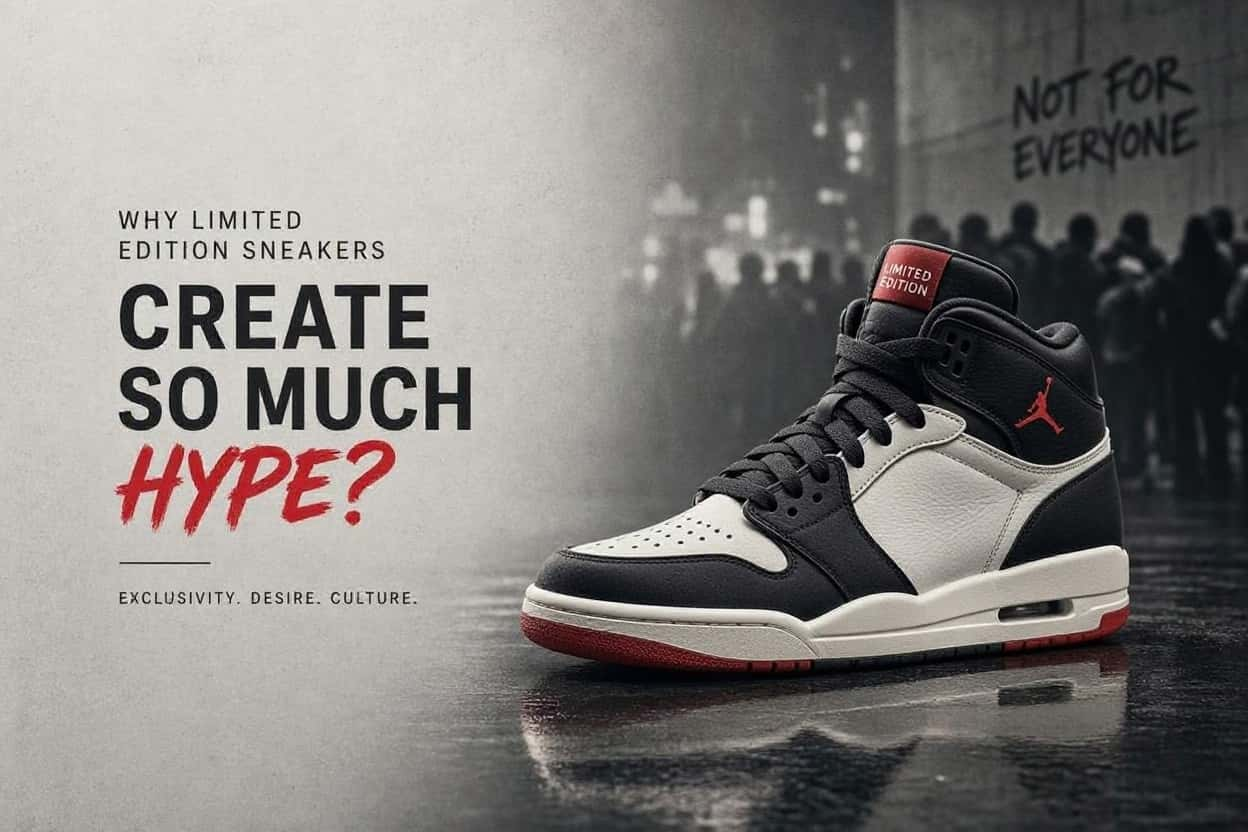
Why Limited Edition Sneakers Create So Much Hype
A new sneaker release can attract thousands of buyers within minutes, even when the shoe costs considerably more than an ordinary pair of athletic footwear.
Limited-edition sneakers create a particular kind of excitement. Some releases feature unusual materials or collaborations with well-known designers, while others are simply familiar models produced in restricted quantities.
The appeal is not always directly related to comfort or performance. Scarcity, storytelling, social identity, and the possibility of future resale all influence how people respond to these releases.
Understanding these factors helps explain why certain sneakers become cultural events rather than ordinary retail products.
Scarcity Makes a Product Feel More Valuable
Limited availability changes the way consumers evaluate a product.
When a sneaker is widely available, buyers can compare prices, wait for discounts, or purchase it whenever convenient.
A limited release introduces uncertainty.
People may worry that they will not have another opportunity to purchase the shoe at its original retail price.
This creates urgency, particularly when a release has a strong following.
However, scarcity does not automatically create lasting value. A shoe can sell out quickly and still lose resale demand later.
The distinction between limited availability and genuine long-term desirability is important.
Collaborations Give Sneakers a Story
Collaborations are one of the strongest drivers of interest in limited-edition footwear.
A sneaker designed with an artist, fashion label, musician, or retailer can attract audiences from outside the traditional sneaker market.
The collaboration gives the product an identity beyond its technical specifications.
For example, a shoe may reflect a designer’s visual language, reference a particular cultural movement, or reinterpret an established silhouette.
Consumers are often attracted to the story behind the release as much as the physical product.
This makes collaborations particularly effective for generating attention.
The Role of Social Media
Social media has transformed the way sneaker releases are discussed.
Before a launch, enthusiasts may encounter leaked images, early reviews, promotional videos, and speculation about production numbers.
After release, photographs and resale listings quickly spread across online communities.
This creates a cycle of anticipation.
A sneaker can become widely discussed before most consumers have even seen it in person.
Influencers and collectors also shape perceptions of desirability. A shoe repeatedly featured by popular accounts may attract attention even when its practical qualities are relatively ordinary.
The result is a market where visibility and cultural relevance can be almost as important as product design.
Resale Markets Add Another Layer
The resale market has become closely connected to limited sneaker releases.
Some buyers purchase shoes to wear, while others view them as collectibles or potential resale opportunities.
Prices are influenced by several factors:
- Original retail price.
- Number of pairs released.
- Demand from collectors.
- Collaboration partners.
- Condition and packaging.
- Availability of alternative colorways.
- Current fashion trends.
A limited sneaker may sell for substantially more than its original retail price, but this is not guaranteed.
Resale prices can fall when interest declines or when brands release similar alternatives.
Buyers should also consider transaction fees, shipping costs, and authentication risks.
Why Some Releases Remain Desirable for Years
Not all limited sneakers have the same cultural staying power.
Certain models remain popular because they are connected to important moments in sneaker history, recognizable designers, or influential cultural communities.
A classic silhouette with a distinctive colorway may continue attracting attention long after the original release.
Other sneakers experience brief periods of popularity driven primarily by social media trends.
Long-term desirability is usually influenced by a combination of design, historical significance, brand identity, and continued relevance.
Understanding Different Types of Limited Releases
The term limited edition covers several different release strategies.
| Release Type | Main Characteristic |
|---|---|
| Collaborative release | Created with an external designer or brand |
| Anniversary edition | Celebrates an important model or brand milestone |
| Regional exclusive | Available in selected markets |
| Special material edition | Uses distinctive fabrics or construction |
| Numbered release | Individual pairs or production units may be numbered |
| Archive-inspired release | Revisits an older design or historical colorway |
These categories can overlap. A collaborative anniversary sneaker, for example, may also be produced in limited quantities.
Are Limited Sneakers Worth Buying?
That depends on why you want them.
If you genuinely enjoy the design and expect to wear the shoes regularly, the retail price may be worth considering.
If the purchase is based entirely on expected resale profit, the decision becomes much riskier.
There is no guarantee that a sneaker will appreciate in value. Even highly publicized releases can lose attention after the initial excitement disappears.
Collectors should also consider storage conditions, material aging, and the difficulty of finding suitable replacement components.
Enjoy the Culture Without Chasing Every Release
Sneaker culture is at its most interesting when it brings together design, sports, fashion, and personal expression.
Limited editions are part of that culture, but they are not the only way to participate.
A well-designed general-release sneaker may provide better comfort and everyday usefulness than a much more expensive collectible.
Understanding the difference between genuine product appeal and artificial urgency helps consumers make more thoughtful decisions.
The most desirable sneaker is not always the rarest one. Sometimes it is simply the pair that fits your style and gets worn regularly.