
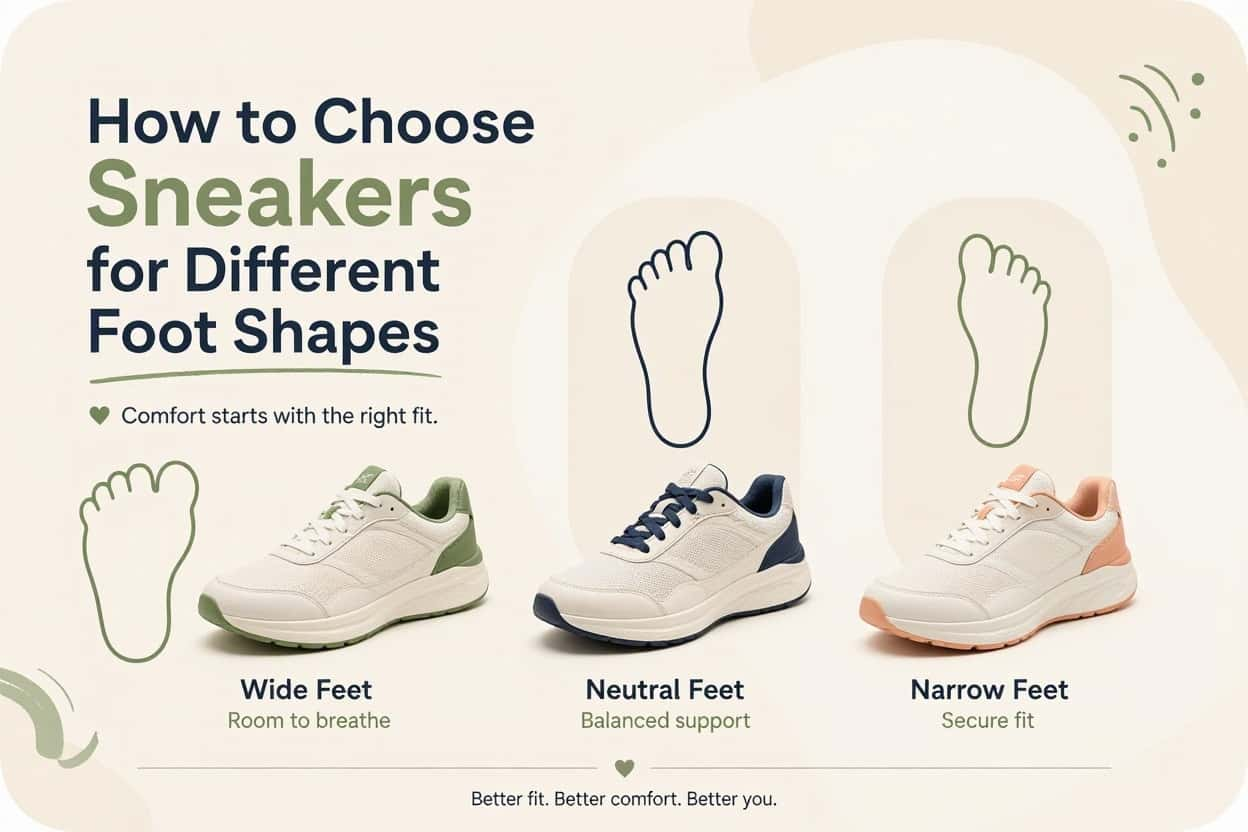
How to Choose Sneakers for Different Foot Shapes
Finding a comfortable pair of sneakers is not always as simple as choosing the right size. Two people can wear the same size and still have completely different experiences with the same shoe. One might enjoy a secure, comfortable fit, while the other struggles with pressure around the toes or an uncomfortable heel.
Foot shape plays a major role in these differences. Width, arch height, toe alignment, and overall foot volume all influence how a sneaker fits. Understanding these characteristics can make shoe shopping considerably easier and help prevent the common mistake of buying footwear based on appearance alone.
Start by Understanding Your Foot Shape
Foot shape is more complicated than simply having narrow or wide feet. Several characteristics determine how a shoe should fit.
Foot width is one of the most noticeable factors. Some people have relatively narrow feet, while others need additional room across the forefoot. A standard-width sneaker may feel loose on a narrow foot or create uncomfortable pressure on a wider one.
Toe shape also matters. Some feet have a relatively straight alignment across the toes, while others taper more noticeably toward the little toe. Shoes with sharply pointed toe boxes may feel restrictive for people who need more natural space in this area.
Arch height is another consideration. A high arch can affect how pressure is distributed across the foot, while a lower arch may change the way certain shoes feel during walking or running.
It is worth remembering that arch height alone does not determine which sneaker is suitable. Comfort, stability, and the intended activity should all be considered together.
Choosing Sneakers for Wide Feet
People with wide feet often experience pressure along the sides of the forefoot. This becomes particularly noticeable in sneakers with narrow toe boxes or heavily structured uppers.
Look for models available in wide or extra-wide sizing. Some brands offer multiple width options, making it easier to find a suitable fit without moving up an entire shoe size.
A few details deserve attention:
- Toe box shape: A rounded or anatomically shaped toe box generally provides more usable space.
- Upper material: Flexible mesh and knit fabrics can accommodate slight variations in foot width.
- Midfoot construction: Avoid shoes that create strong pressure across the middle of the foot.
- Lacing system: Adjustable laces can help customize the fit without compressing the forefoot.
Do not assume that buying a longer size will solve a width problem. Extra length can cause heel movement and make walking less stable.
Finding the Right Fit for Narrow Feet
Narrow-footed shoppers frequently encounter the opposite problem. Their feet may slide from side to side even when the shoe length is correct.
This movement can create friction, reduce confidence when changing direction, and make the shoe feel less secure.
Sneakers with adjustable lacing systems are often a useful starting point. Traditional eyelets allow the wearer to tighten different sections independently, while some athletic models include additional eyelets for heel-lock lacing.
A structured heel counter can also help keep the rearfoot in place.
However, tightening the laces excessively is not a good solution. It may create pressure across the top of the foot without fixing the underlying fit problem.
Consider Your Arch and Foot Volume
Arch height receives considerable attention in footwear discussions, but the overall shape and volume of the foot are equally important.
A high-volume foot may feel cramped inside a shoe with a low-profile upper, even if the width and length appear correct.
Someone with a low-volume foot may experience excessive movement inside a spacious shoe.
When trying sneakers, pay attention to the space above the toes and around the instep. Your foot should feel comfortably secured without being squeezed against the upper.
For running shoes, consider how the shoe behaves during movement rather than judging it only while standing still.
A Practical Fitting Checklist
The following checks can help you evaluate a new pair of sneakers:
| What to Check | What a Good Fit Feels Like |
|---|---|
| Toe room | Toes can move without hitting the front |
| Forefoot width | No uncomfortable side pressure |
| Heel security | Minimal slipping during walking |
| Midfoot | Secure without excessive compression |
| Instep | No painful pressure from the upper |
| Overall length | Adequate space ahead of the longest toe |
Try shoes later in the day if possible, when feet may be slightly larger after normal activity.
Wear the socks you expect to use with the sneakers. If you are comparing different brands, remember that sizing conventions can vary, so relying exclusively on the number printed inside the shoe is unreliable.
When to Consider a Professional Fitting
Most people can find comfortable everyday sneakers through careful comparison and proper fitting. However, recurring pain, unusual pressure points, or significant differences between the left and right foot may justify a professional assessment.
A specialist can evaluate foot structure, walking mechanics, and footwear requirements more thoroughly than a standard size chart.
People with persistent foot pain should avoid assuming that a particular arch type automatically requires a specific shoe or insert.
The Best Sneaker Is the One That Fits Your Foot
Popular models, attractive designs, and impressive technology are useful starting points, but none of them guarantees a comfortable fit.
Pay attention to width, toe-box shape, heel security, and overall foot volume. Compare shoes in person whenever possible, and give your feet enough time to reveal pressure points that might not be obvious during the first few minutes.
A well-fitting sneaker should feel natural rather than something your feet need to adapt to.