
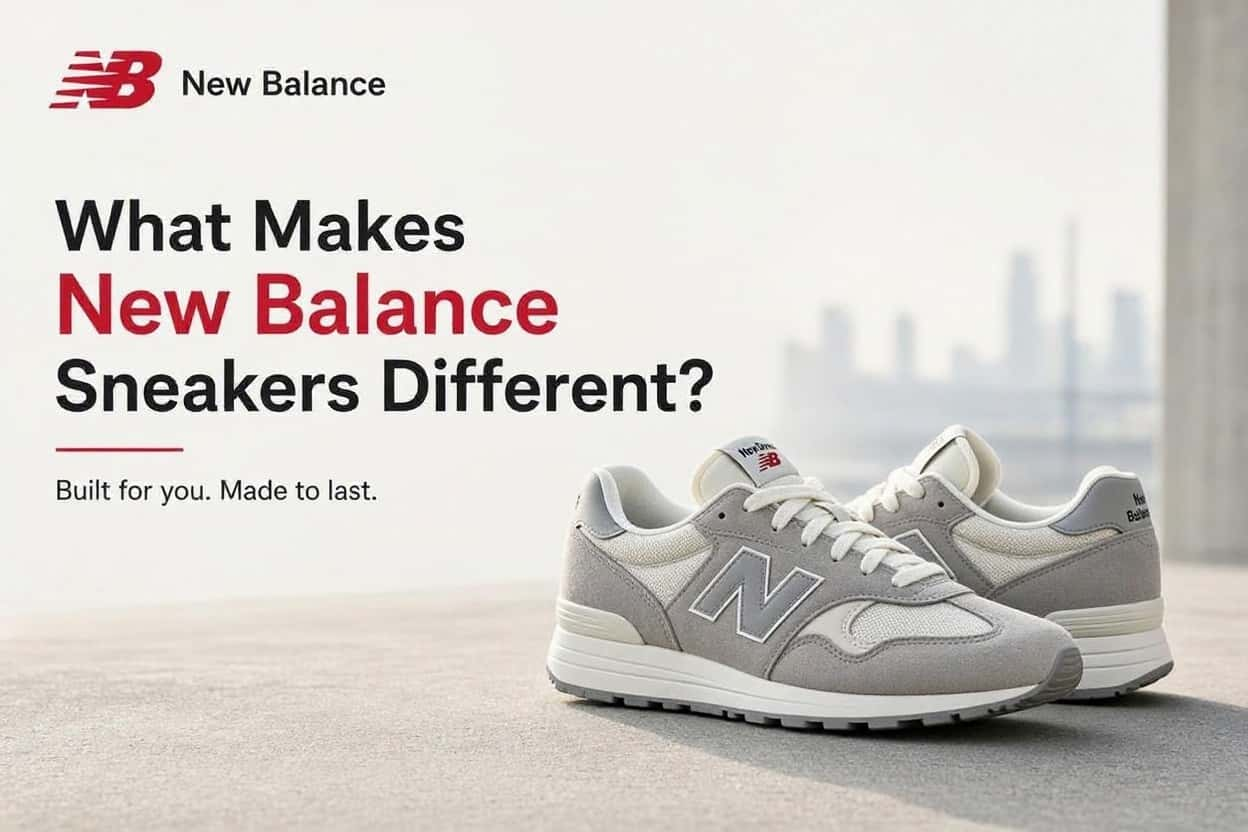
What Makes New Balance Sneakers Different from Other Athletic Brands?
New Balance has developed a distinctive position in the athletic footwear market. Its sneakers appear in running communities, fashion collections, everyday wardrobes, and the collections of dedicated sneaker enthusiasts.
The brand is particularly recognizable for its combination of performance-oriented footwear, understated designs, and a strong connection to traditional running shoes.
But what actually makes New Balance different from competitors such as Nike, Adidas, and ASICS?
The answer is not a single technology or design feature. Its identity comes from a combination of fit options, product development, heritage models, and a design language that has evolved without abandoning its roots.
A Brand With Strong Running Heritage
New Balance began its history in the early twentieth century and developed a reputation around footwear designed to support comfortable movement.
Running shoes became an important part of its identity as athletic footwear technology advanced.
The company gradually introduced different cushioning systems, sole constructions, and upper designs to address changing performance requirements.
This background continues to influence its modern product range.
Some New Balance models are designed primarily for running performance, while others draw heavily from older athletic silhouettes and are marketed as lifestyle footwear.
That distinction is important because two sneakers carrying the same logo can have very different intended uses.
A Focus on Fit and Width Options
One of New Balance’s notable characteristics is its attention to shoe width.
Many footwear brands primarily offer standard-width sizing, with wider options available only in selected models.
New Balance has historically provided multiple width options across parts of its product range.
This can be useful for shoppers whose feet do not fit comfortably into conventional shoe shapes.
However, width availability varies by model, region, and product category. A particular lifestyle sneaker may not offer the same sizing choices as a performance running shoe.
The practical lesson is to check the exact product specification rather than assuming every model follows the same sizing system.
Cushioning Technology and Product Construction
New Balance has developed several cushioning technologies over the years.
Fresh Foam is used in various running and athletic models, with different formulations and geometries depending on the shoe.
FuelCell is another technology associated with responsive performance-oriented footwear.
ABZORB appears in selected models and is designed to help manage impact during movement.
These technologies serve different purposes, and their performance depends on the complete shoe construction.
A running model designed for longer distances should not be judged by exactly the same standards as a retro lifestyle sneaker.
Why the 990 Series Became So Recognizable
The 990 family is among the most recognizable parts of New Balance’s product identity.
Its appeal comes from a combination of running heritage, substantial construction, familiar grey colorways, and understated styling.
The series has also become closely associated with contemporary casual fashion.
Rather than relying on dramatic graphics or highly aggressive shapes, many 990 models use layered materials, carefully balanced proportions, and relatively restrained colors.
This gives them a distinctive appearance that works with a broad range of casual clothing.
Comparing New Balance With Other Brands
Each major athletic brand has its own design priorities, although individual product lines can overlap considerably.
| Brand | Common Design Associations | What to Compare |
|---|---|---|
| New Balance | Running heritage, varied widths, heritage-inspired styling | Fit options and model-specific cushioning |
| Nike | Performance innovation and broad lifestyle influence | Model construction and intended activity |
| Adidas | Sportswear heritage and foam-based footwear technologies | Midsole feel and upper design |
| ASICS | Running-focused engineering and stability-oriented models | Support, fit, and running performance |
| Puma | Athletic heritage and fashion-oriented collaborations | Silhouette and everyday versatility |
These are broad brand associations rather than universal product characteristics.
For example, an advanced Nike running shoe may have more in common with a high-performance ASICS model than with a casual Nike lifestyle sneaker.
Made-in-USA and Made-in-UK Collections
New Balance also maintains a distinctive position through selected Made in USA and Made in UK footwear collections.
These ranges often emphasize material selection, manufacturing heritage, and particular design traditions.
They are frequently positioned differently from the brand’s mainstream international releases.
However, manufacturing location should not be treated as an automatic measure of comfort or performance. The specific materials, construction, fit, and intended use remain more important when choosing footwear.
Lifestyle Popularity Beyond Running
New Balance has benefited from the growing popularity of sneakers that can transition between casual clothing and everyday activities.
Models such as the 574, 990 series, and several classic running-inspired designs have become familiar outside traditional sporting environments.
Their appeal is partly practical: neutral colors and relatively versatile shapes are easy to incorporate into everyday wardrobes.
The brand has also participated in collaborations that introduce new materials, colors, and interpretations of established silhouettes.
These projects help keep older designs relevant to changing fashion trends.
Choosing a New Balance Model
Start by identifying your main purpose.
If you need running shoes, compare the brand’s dedicated performance models based on distance, fit, cushioning, and stability.
For everyday wear, consider the shape, weight, materials, and how easily the sneaker fits into your wardrobe.
If width is a concern, investigate the available sizing options for the exact model.
New Balance’s identity is built on more than its familiar logo or retro appearance. Its combination of running heritage, fit considerations, technical development, and lifestyle appeal explains why it occupies such a recognizable place in modern sneaker culture.