
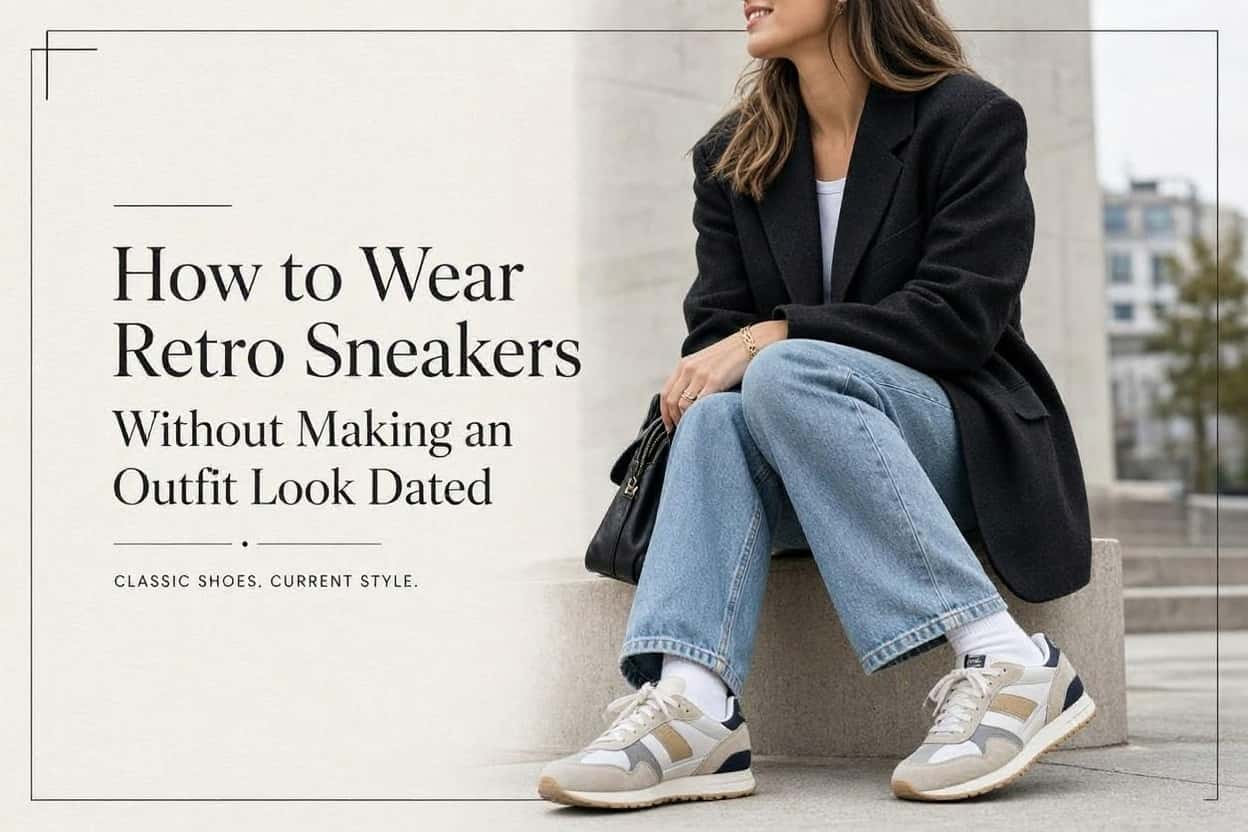
How to Wear Retro Sneakers Without Making an Outfit Look Dated
Retro sneakers have a quality that modern performance footwear sometimes lacks. Their shapes, colors, and familiar design details often carry references to earlier decades of sportswear.
From slim running shoes inspired by the 1970s to chunky basketball silhouettes from the 1990s, vintage-inspired footwear continues to appear in everyday fashion.
The challenge is wearing these shoes without making an outfit feel like a costume. The answer usually lies in balance. A retro sneaker can provide character, but the rest of the outfit needs enough contemporary structure to keep the overall appearance fresh.
Understand the Shape of Your Sneakers
Retro sneakers come in several distinct silhouettes.
Slim running shoes often feature narrow profiles, low midsoles, and relatively simple uppers. These designs work particularly well with straight-leg trousers, relaxed denim, and casual shorts.
Classic basketball sneakers tend to have thicker soles and more substantial uppers. Their visual weight makes them suitable for wider trousers and relaxed streetwear outfits.
Chunky retro trainers occupy another category. They can become the strongest visual element in an outfit, so the surrounding clothing should avoid unnecessary bulk.
Understanding the proportions of your shoes is more useful than following a fixed rule about which trousers are fashionable.
Choose Trousers That Complement the Silhouette
Trouser length can dramatically change how retro sneakers look.
Slim sneakers often benefit from trousers that sit cleanly above the shoe or create a small break near the ankle. Excessively long fabric can hide their shape and make the lower half of the outfit look untidy.
Chunkier sneakers can support wider trousers because their larger proportions help balance the overall silhouette.
Consider these combinations:
| Sneaker Style | Suitable Trousers | General Effect |
|---|---|---|
| Slim retro runners | Straight-leg jeans | Relaxed and understated |
| Vintage basketball shoes | Loose denim | Casual streetwear |
| Chunky trainers | Wide-leg trousers | Contemporary proportions |
| Classic canvas sneakers | Chinos | Simple everyday style |
There is no need to match the exact decade of the shoes with the clothing. Modern pieces often create a more interesting contrast.
Keep the Color Palette Under Control
Retro sneakers frequently feature contrasting panels, vintage logos, and multiple colors.
This can make them visually distinctive, but it also creates a risk of color overload.
If your sneakers contain several strong colors, choose relatively simple clothing. Neutral shades such as navy, grey, cream, black, and olive provide a useful foundation.
For example, a pair of cream-and-green retro runners can work with dark denim and a plain white T-shirt. The shoes remain noticeable without competing with several other bright elements.
For more colorful outfits, repeat one small shoe color elsewhere in the clothing. A jacket detail or accessory can create a visual connection without making the outfit look overly coordinated.
Mix Vintage Footwear With Modern Clothing
One of the easiest ways to make retro sneakers feel current is to combine them with contemporary clothing.
A vintage-inspired running shoe can look particularly good with modern tailored trousers and a relaxed overshirt.
Classic basketball sneakers can be paired with a simple technical jacket or a clean-cut hoodie.
This contrast gives the outfit some personality without relying on head-to-toe nostalgia.
Avoid treating every vintage detail as something that needs to be repeated. Wearing an old-school track jacket, retro shorts, vintage graphic tee, and matching sneakers simultaneously may produce a very specific throwback appearance. That can work intentionally, but it is less versatile for everyday dressing.
Pay Attention to Socks
Socks are a small detail, yet they influence the visual relationship between trousers and shoes.
White crew socks have become a common pairing with retro sneakers, particularly when worn with shorts or slightly cropped trousers.
Ribbed socks can add texture, while simple athletic socks maintain a cleaner appearance.
The ideal length depends on the outfit. Ankle socks may work with low-profile sneakers, while crew socks can complement classic basketball silhouettes.
Color matters as well. White and grey are versatile choices, but matching the socks to the trousers can create a more continuous visual line.
Choose the Right Retro Sneaker for the Occasion
Not every vintage-inspired shoe works in every setting.
A clean leather basketball sneaker may suit a casual office environment with relaxed dress codes. A heavily distressed or brightly colored running shoe may be better suited to weekends.
For travel and daily errands, lightweight retro runners can offer a comfortable combination of practicality and style.
Think about where you will wear the shoes before choosing an outfit around them.
Avoid the Common Styling Mistakes
A few problems appear frequently when people experiment with retro footwear.
- Ignoring proportions: Very slim trousers can sometimes look unbalanced with oversized sneakers.
- Overmatching colors: Repeating every shoe color in the outfit can make the result feel artificial.
- Wearing visibly worn shoes with formal clothing: Condition matters when trying to create a polished appearance.
- Following trends too literally: Not every vintage silhouette needs oversized clothing.
- Forgetting practicality: A fashionable shoe is less useful if it is uncomfortable for the planned activity.
Let the Shoes Add Character
Retro sneakers work best when they feel like a natural part of an outfit rather than its entire purpose.
Start with comfortable proportions, choose colors that work with the rest of your wardrobe, and mix vintage-inspired footwear with contemporary basics.
The appeal of retro design comes from its history and recognizable character. There is no need to recreate an entire decade to enjoy it.