
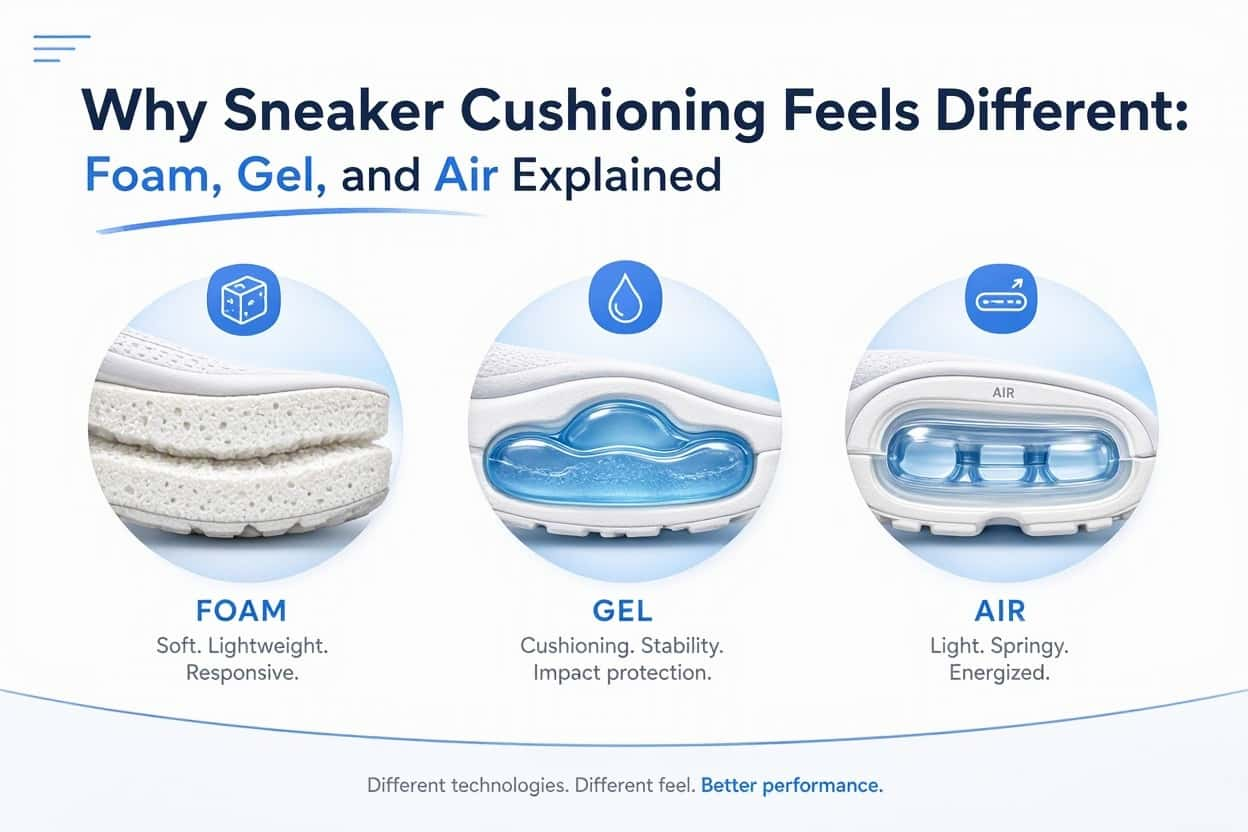
Why Sneaker Cushioning Feels Different: Foam, Gel, and Air Explained
Two sneakers can look almost identical in thickness yet feel completely different underfoot. One may provide a soft, sinking sensation, while another feels firm and responsive. These differences are largely influenced by the materials and structures used inside the midsole.
Sneaker cushioning has become a major area of innovation, with manufacturers experimenting with specialized foams, pressurized air units, gels, and combinations of different materials. Understanding how these systems work makes it easier to interpret product specifications and choose footwear that matches your preferences.
The Role of the Midsole
Most modern athletic sneakers contain three main layers: an upper, a midsole, and an outsole.
The upper holds the foot in place. The outsole makes contact with the ground, providing traction and protecting the shoe from wear.
Between them sits the midsole, which plays a major role in cushioning.
When your foot lands, the midsole deforms under load. Depending on its material and construction, it absorbs, stores, and returns varying amounts of mechanical energy.
The sensation depends on more than softness. Density, thickness, geometry, temperature, and the speed at which the material recovers all contribute to how a sneaker feels.
EVA Foam: A Familiar Cushioning Material
Ethylene-vinyl acetate, commonly known as EVA, has been used in athletic footwear for decades.
It is popular because it can be manufactured in different densities and shapes while remaining relatively lightweight.
Traditional EVA midsoles generally provide a balanced combination of cushioning, flexibility, and affordability.
However, not all EVA foam feels the same. A basic EVA compound can feel relatively firm, while modified formulations may offer a softer or more resilient experience.
Its advantages include:
- Relatively low weight.
- Flexible construction.
- Broad manufacturing versatility.
- Generally accessible production costs.
One limitation is that some EVA formulations may gradually lose their original feel after repeated compression and prolonged use.
Modern Performance Foams
Running shoe manufacturers have developed more advanced foam compounds to improve cushioning and energy return.
PEBA-based foams, for example, are used in certain high-performance running shoes because they can provide a combination of low weight, resilience, and flexibility.
Expanded TPU is another material found in athletic footwear. It can offer a springy sensation and may provide good durability depending on its formulation and construction.
Different foam technologies should not be judged by their names alone.
| Material | Common Characteristics | Typical Considerations |
|---|---|---|
| EVA | Versatile and lightweight | Feel varies significantly by formulation |
| PEBA | Lightweight and resilient | Often used in performance-oriented footwear |
| Expanded TPU | Springy and durable in many formulations | Can vary in weight and firmness |
| Traditional PU | Often firm and supportive | Usually heavier than many modern foam alternatives |
The actual ride depends on the entire midsole design, not just the material.
Air Cushioning: More Than a Soft Bubble
Air cushioning systems use pressurized air contained within specially constructed units.
These units can be positioned in the heel, forefoot, or across a larger section of the midsole.
The sensation depends on factors such as air pressure, chamber shape, surrounding foam, and the way the unit is integrated into the shoe.
Some designs emphasize impact protection, while others aim to create a responsive sensation.
Air technology is particularly interesting because it allows manufacturers to experiment with different cushioning geometries without relying exclusively on traditional foam.
However, a visible air unit does not automatically mean that a sneaker will be more comfortable than a conventional foam model.
Gel Cushioning and Shock Absorption
Gel-based cushioning systems use specialized materials designed to deform under pressure.
Some athletic footwear brands incorporate gel components into specific areas of the midsole, particularly around the heel.
These structures can help manage impact forces and influence the transition between landing and toe-off.
Gel cushioning is often combined with foam rather than used as the entire midsole.
The result depends on the size, placement, and mechanical properties of the gel component.
Softness Is Not the Same as Performance
A common misconception is that the softest sneaker must provide the best cushioning.
In reality, an extremely soft midsole can feel unstable to some wearers, particularly during quick movements or changes in direction.
A firmer platform may provide a more controlled sensation, even if it initially feels less luxurious.
The best choice depends on the activity.
For everyday walking, many people prefer moderate cushioning with a comfortable transition through each step.
For long-distance running, the balance between impact protection, stability, weight, and responsiveness becomes more important.
For court sports, lateral stability and predictable ground contact may matter more than maximum softness.
Why Midsole Geometry Matters
Material selection is only one part of sneaker engineering.
The shape of the midsole can change how forces move through the shoe.
A curved rocker design, for example, may encourage a smoother transition from heel to toe. A wider platform can create a more stable base, while different heel-to-toe offsets alter the relationship between the front and rear of the foot.
Manufacturers frequently combine multiple technologies in a single model.
This explains why two shoes using similar foam compounds can produce noticeably different sensations.
Choosing the Right Cushioning
Before purchasing a sneaker, consider the following:
- Intended activity: Running, walking, gym training, and basketball place different demands on footwear.
- Preferred sensation: Some people enjoy a soft ride, while others prefer a firmer platform.
- Stability: A tall, narrow midsole may feel less secure for certain movements.
- Weight: Extra cushioning structures can influence the overall weight of the shoe.
- Fit: Even advanced cushioning cannot compensate for an uncomfortable upper or unsuitable shape.
The next time you compare sneakers, look beyond marketing terms such as responsive, cloud-like, or maximum cushioning. Examine the construction, consider the intended activity, and pay attention to how the complete shoe behaves underfoot.